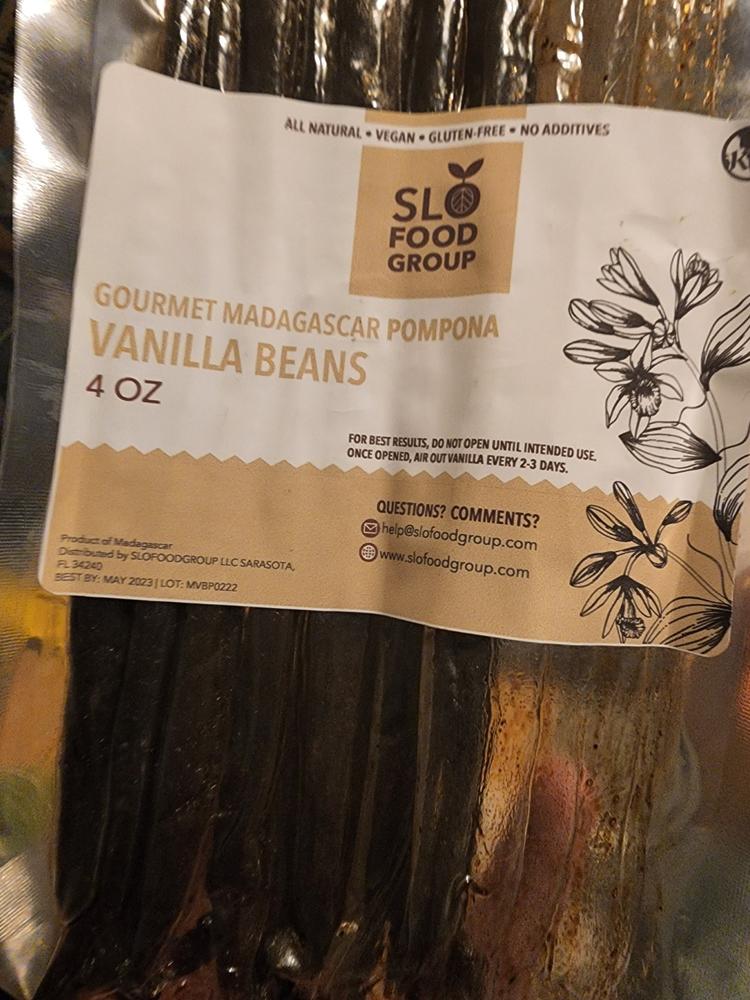
Gourmet Madagascar Pompona Vanilla Beans
Rare and elusive, often called the Mexican cure, Pompona vanilla beans from Madagascar
Current price: $22.00

Vanilla Beans
Excellent Product! Excellent Service!

I'm a convert
I've been making my own vanilla extract for over a decade and used to buy my beans based on reviews at a Infamous Global seller. Was never sure what I would get. Then I found this company! The beans were beautiful! Fragrant, moist but not too moist, easy to cut open to expose the seeds and each Bean was six to seven inches long. I'm a happy extract maker! 💝💃🥳
High Quality Vanilla - excellent customer service.
Slo Food group team takes great care of their customers. Received a broken bottle of Vanilla and it was immediately handled. Received my replacement bottle within 3 days.
This extract is used to make our Tahitian Vanilla Cakes!

Great place to get your spices
SLO Food group is the best place I have found to buy my vanilla beans, great customer service, fast shipping and very competitive prices. Thank you for helping me with my project, Vanilla extract. Thank you don young




This is a carousel with one large image and a track of thumbnails below. Select any of the image buttons to change the main image above.
Vanilla Beans
Excellent Product! Excellent Service!
I'm a convert
I've been making my own vanilla extract for over a decade and used to buy my beans based on reviews at a Infamous Global seller. Was never sure what I would get. Then I found this company! The beans were beautiful! Fragrant, moist but not too moist, easy to cut open to expose the seeds and each Bean was six to seven inches long. I'm a happy extract maker! 💝💃🥳
High Quality Vanilla - excellent customer service.
Slo Food group team takes great care of their customers. Received a broken bottle of Vanilla and it was immediately handled. Received my replacement bottle within 3 days.
This extract is used to make our Tahitian Vanilla Cakes!
Great place to get your spices
SLO Food group is the best place I have found to buy my vanilla beans, great customer service, fast shipping and very competitive prices. Thank you for helping me with my project, Vanilla extract. Thank you don young
How to Make Vanilla Extract
An easy to follow guide to making vanilla extract in your own kitchen
Often Called Banana Vanilla

Rare, Less Than 1% Globally
Vanilla pompona yields far less per plant than standard planifolia, making it a genuine rarity among vanilla species.

A Different Curing Method
Sun-cured rather than water-blanched, a process closer to Mexican tradition than the standard Bourbon curing method.

Bigger, Oilier, More Complex
Larger and plumper than typical vanilla pods, with a flavor profile of ripe plum, cherry, and dark chocolate far beyond classic vanilla sweetness.

A Genuine Hybrid Story
Madagascar's Pompona is a natural hybrid of Pompona and Planifolia orchids grown side by side for decades, a genuinely unique origin story.
Technical Specifications
| Origin | Madagascar |
|---|---|
| Producing Region | Sava, Madagascar |
| Species | Vanilla pompona |
| Grade | Gourmet, Grade A, Prime, Black, Rare/Specialty |
| Common Names | Vanilla Pompona; Locally Called "Banana Vanilla" in Madagascar |
| Size | 16-25 cm (6.3-9.8 Inches) |
| Moisture Content | 32-38% |
| Curing/Aging Period | 5-6 Months |
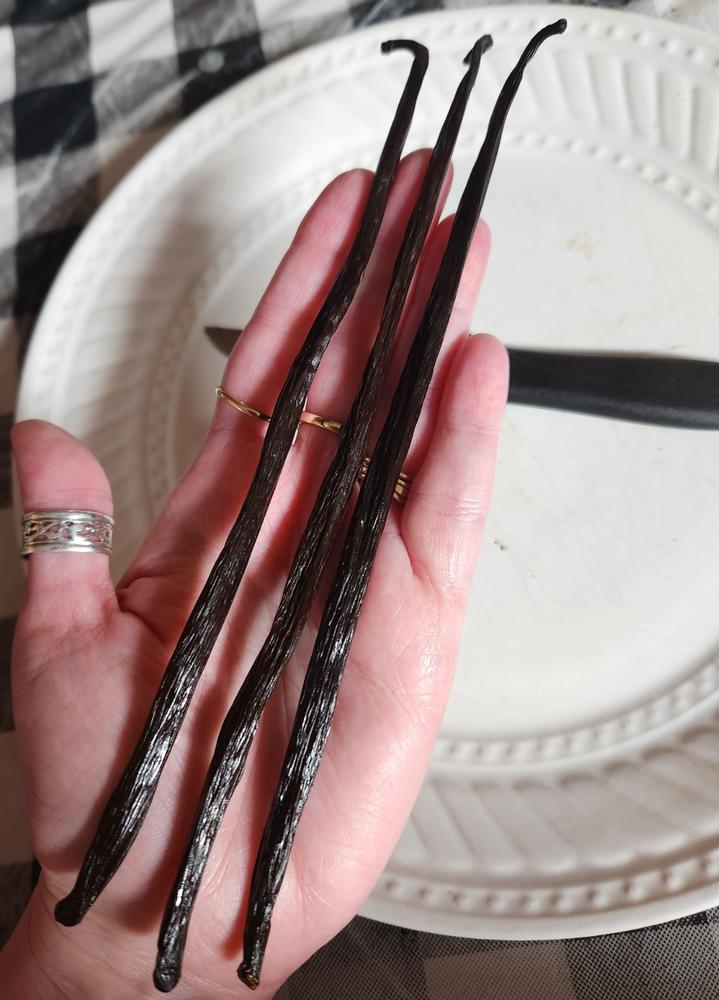
| Color/Appearance | Dark, Thick, Oily Pod; Larger and Plumper Than Planifolia Beans |
| Certifications | Kosher, GMP |
| Flavor Profile | Rich, Sweet, Oily, Complex |
| Tasting Notes | Ripe Plum, Dried Fruit, Cherry, Dark Chocolate, Banana, Nutmeg, Subtle Smokiness |
| Uses | Vanilla Extract, Bourbon and Dark Rum Infusions, Brandy and Cognac, Custards, Gourmet Baking, Savory Reductions |
| Pairing | Dark Chocolate, Rum, Cognac, Tropical Fruit, Roasted or Smoked Dishes |
| Rarity | Extremely Rare; Represents Less Than 1% of Global Vanilla Production |
| Storage | Airtight Container, Cool, Dark Place |
| Shelf Life | 12-18 Months Properly Stored |
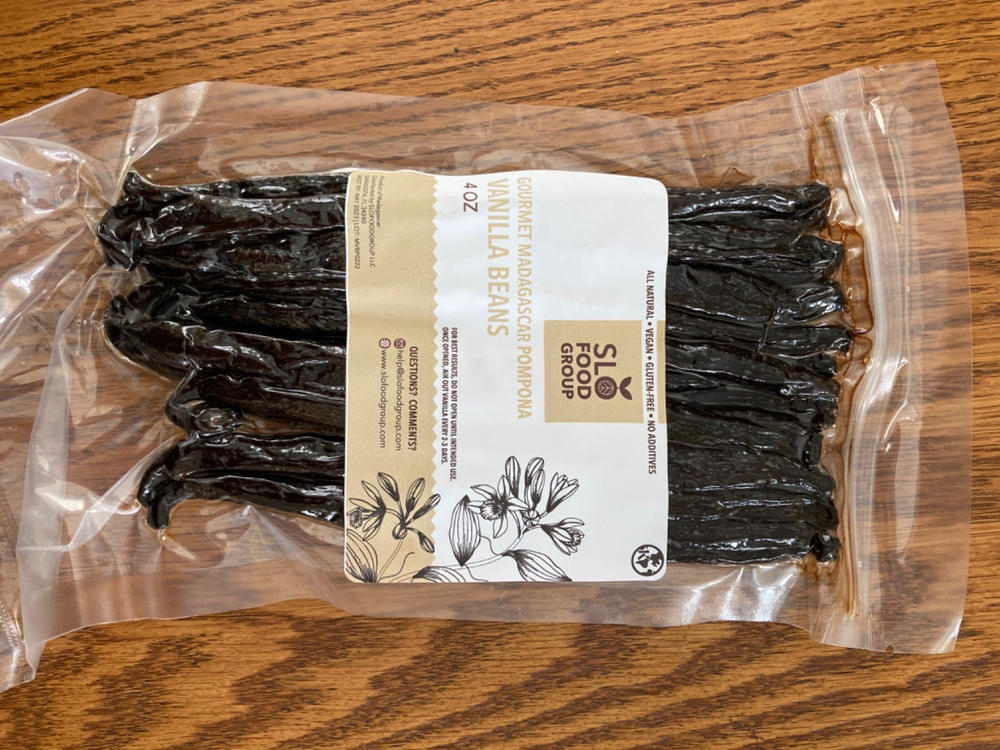
| Packaging | Vacuum-Sealed, Food-Grade |
Buy Vanilla Pompona from Madagascar Online
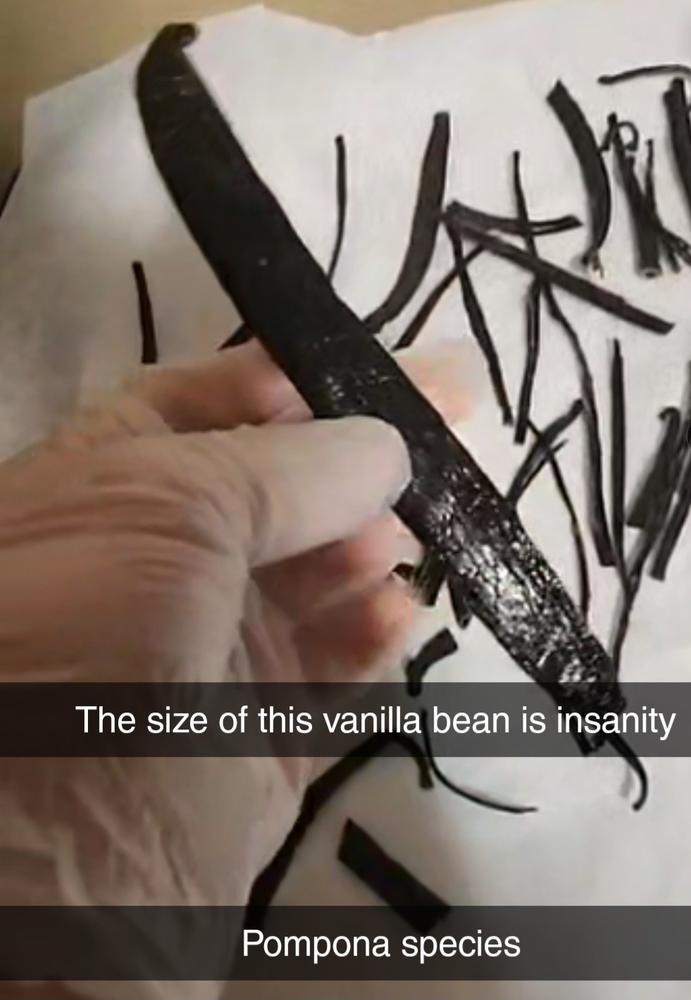
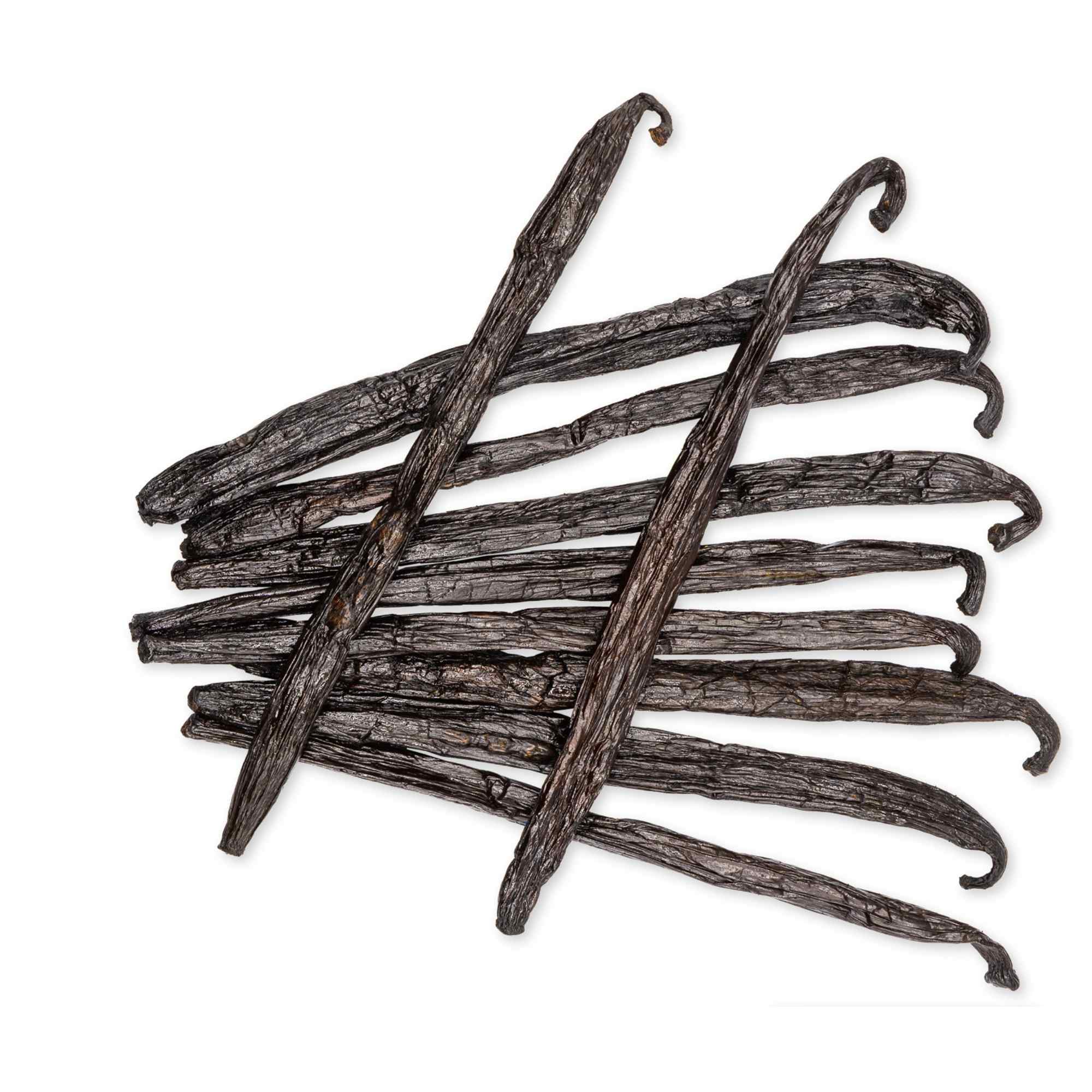
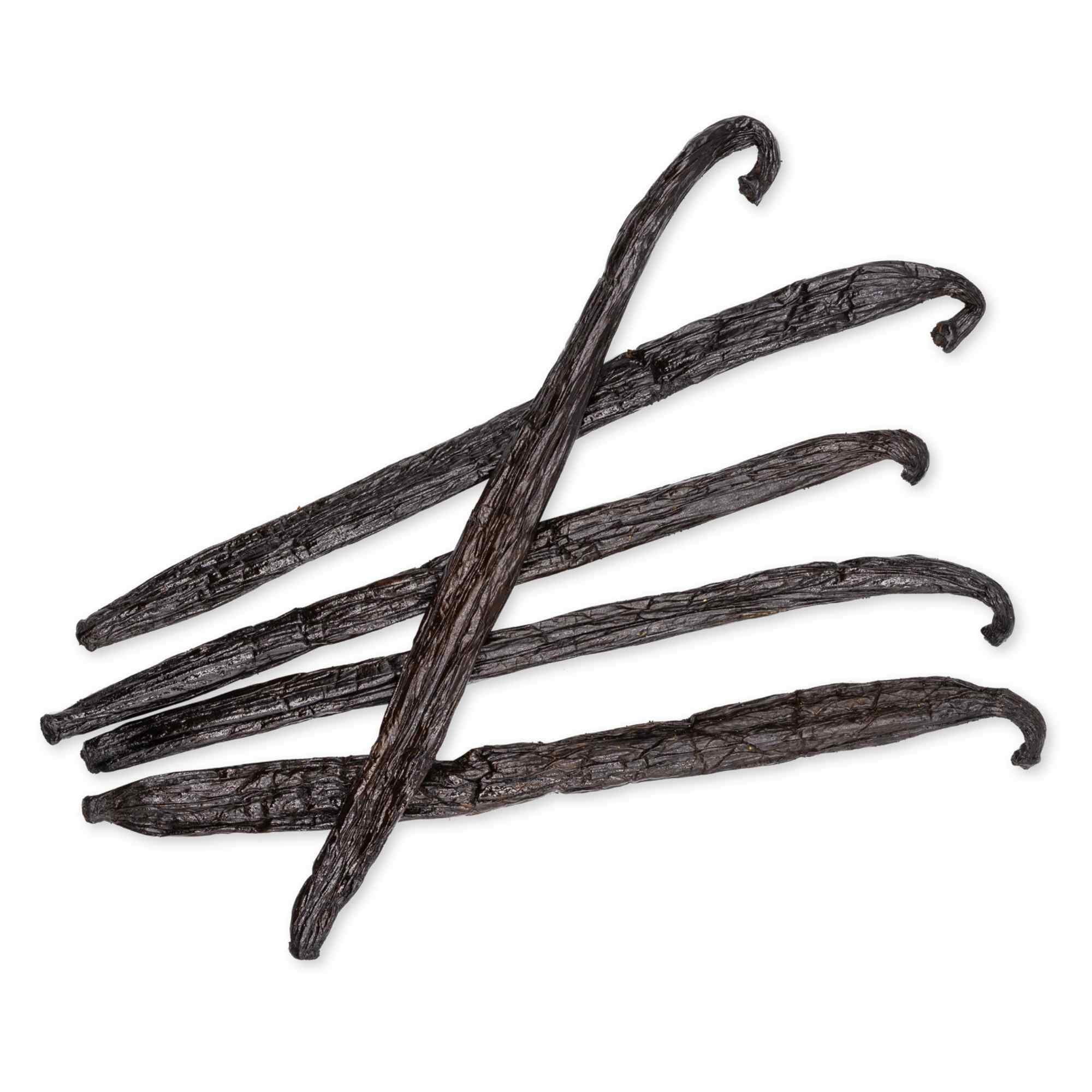
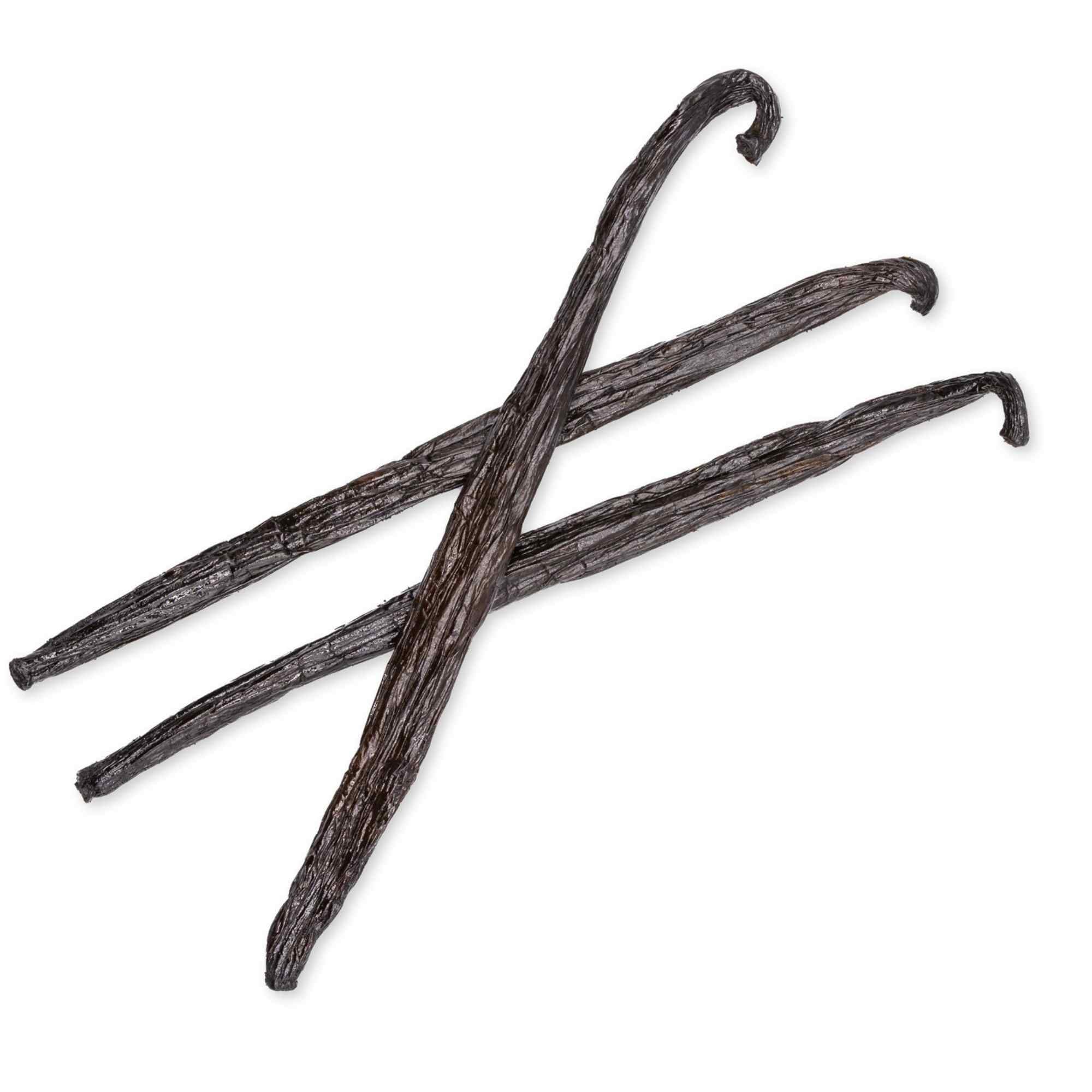
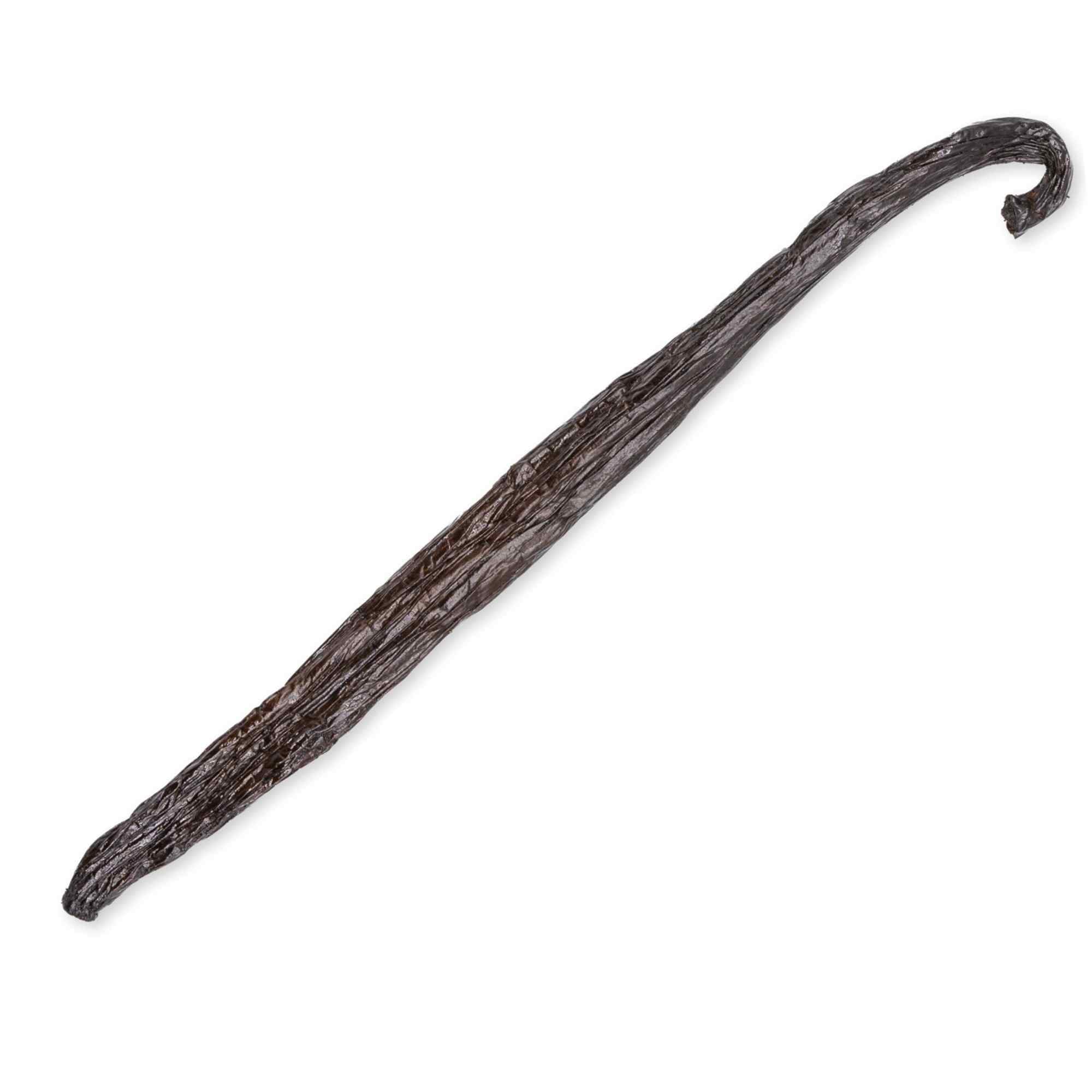
Pompona vanilla bean pods come from a species of vanilla orchid long forgotten but now sought after by vanilla enthusiasts when making vanilla extract. Known for their larger-than-average size, Pompona vanilla beans are definitely the king of vanilla. A leather-like pod gives way to an immense amount of vanilla seeds and higher-than-average vanillin content. Often referred to as the Mexican-cured Madagascar vanilla, these vanilla beans are not blanched in water to kick-start the enzymatic process. The higher water content of these vanilla beans makes sun curing, versus water curing, the ideal method to reduce water content, intensify aroma, and stabilize the vanilla.
A Rare but Not Forgotten Vanilla Species
What Is Vanilla Pompona?
How to Use Vanilla Pompona
Vanilla pompona has recently made a comeback after decades of decline. Now this vanilla can be found used to make everything from vanilla extract and ice cream to body scrubs and more. In our shop, you'll find these beans and many other vanillas to choose from for all your cooking and baking needs.
Pompona vanilla from Madagascar is not a pure Pompona bean, but rather a hybrid of Pompona and Planifolia vanilla that developed after many decades of these orchids growing side by side. This is very similar to how Tahitian vanilla came about, discovered growing wild in Tahiti.
Vanilla pompona is a species of vanilla native to Peru, Mexico, and other parts of Central and South America. More recently, it has also been found growing in Costa Rica, Madagascar, and even Florida. It's a member of the Orchidaceae orchid family. Locally in Madagascar, it's often called "banana vanilla," a nickname earned from its notably large, plump size compared to standard vanilla pods. In its native range, vanilla's natural pollinator is the Melipona bee, a species found only in Mexico and parts of Central America. Everywhere else vanilla is grown, including Madagascar, there's no natural pollinator present, so every flower must be hand-pollinated to produce fruit.
Pompona vanilla is used just like any other vanilla bean, such as Vanilla planifolia or Vanilla tahitensis. To use these vanilla beans for baking, simply slice the pod down the center and scrape the inner seeds to add to your favorite recipe. To use for making vanilla extract, we always recommend following the standard ratio as prescribed by the FDA.
About These Pompona-Type Vanilla Beans From Madagascar
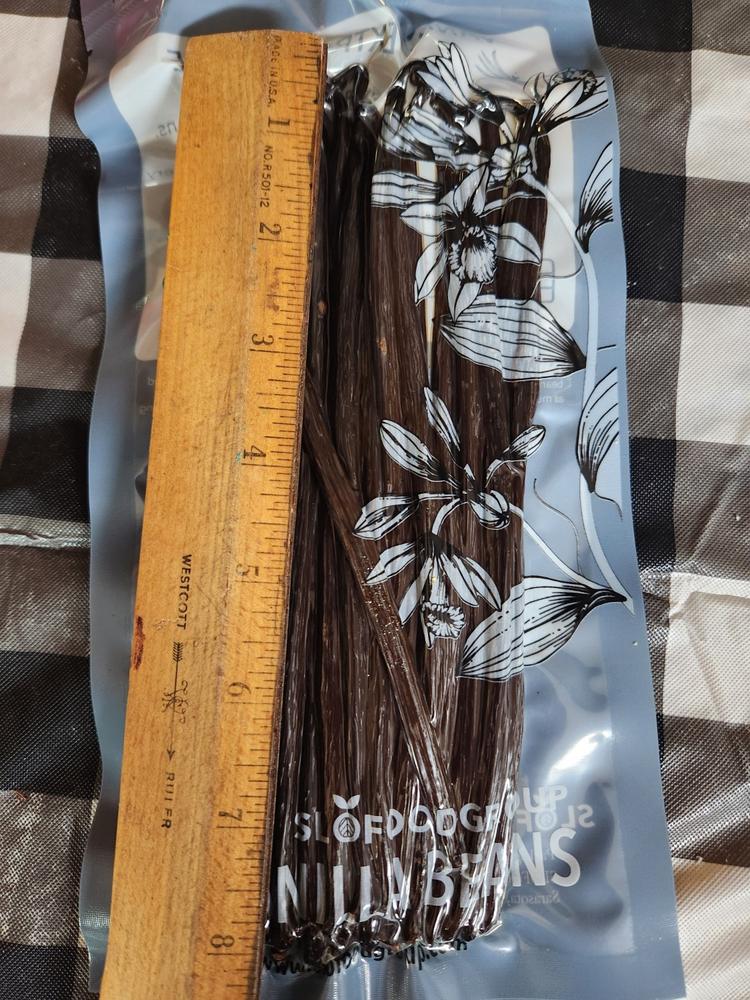
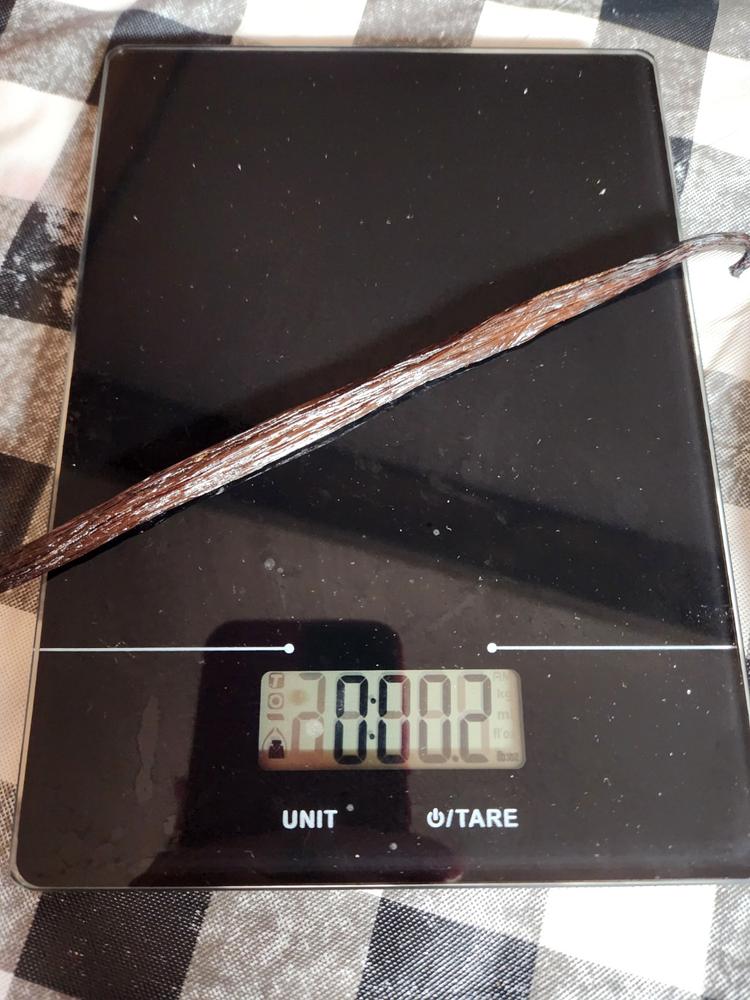
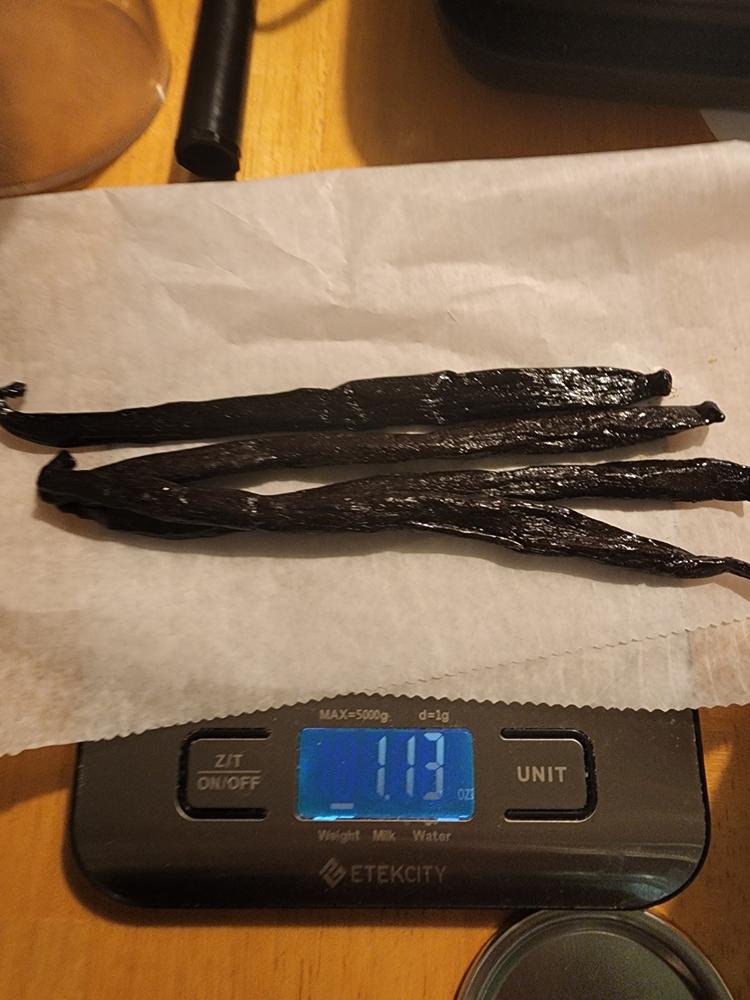
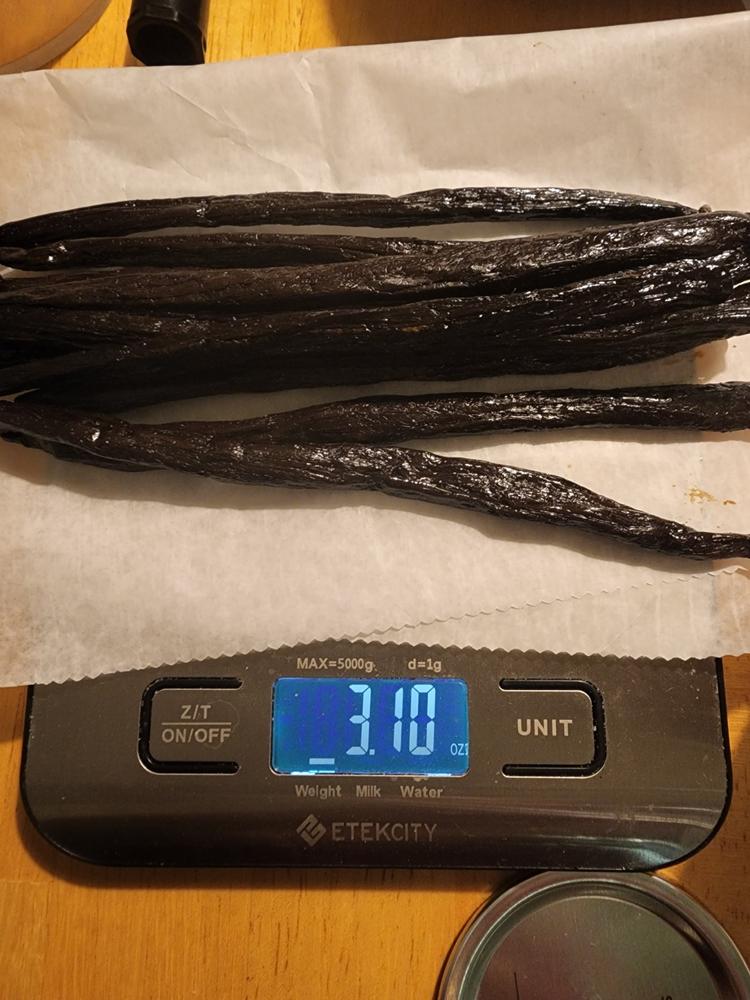
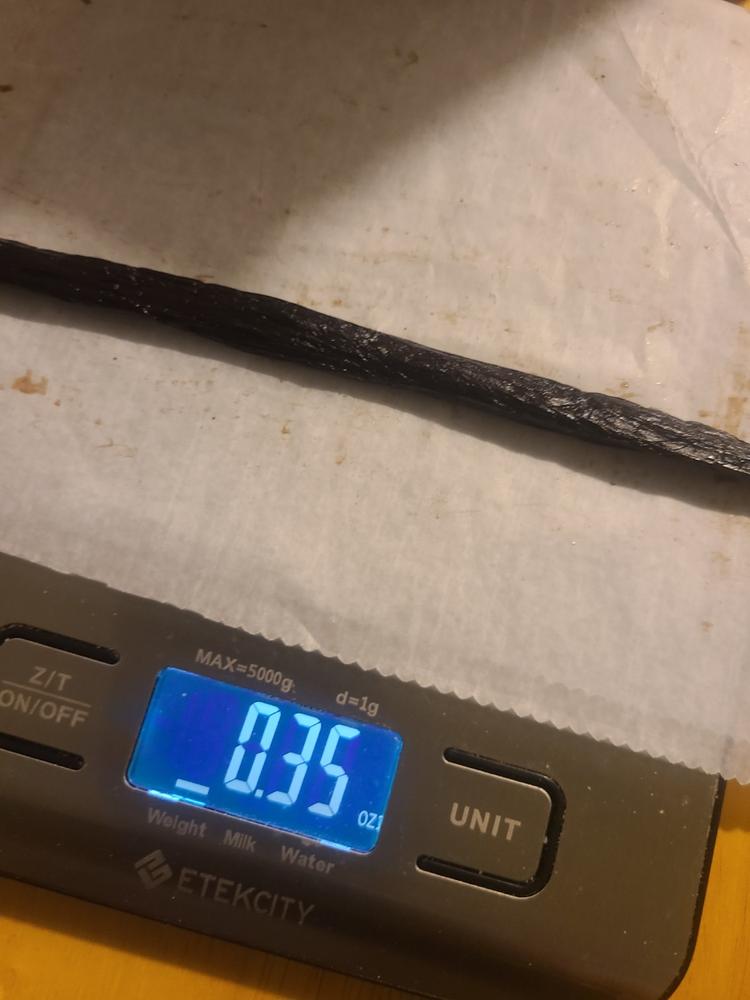
- Average pod size is 14 cm and up; due to natural variance, some pods can extend well beyond that to 22-24 cm or larger. Vanilla is an agricultural product whose value is based on weight, so size can vary meaningfully by batch, with Pompona pods consistently plumper and thicker than standard Planifolia beans
- Pompona vanilla is thicker than other varieties of vanilla
- Oily, with notes of ripe plum, dark chocolate, and hints of cherry
- Limited annual stock
A Natural Partner for Extracts
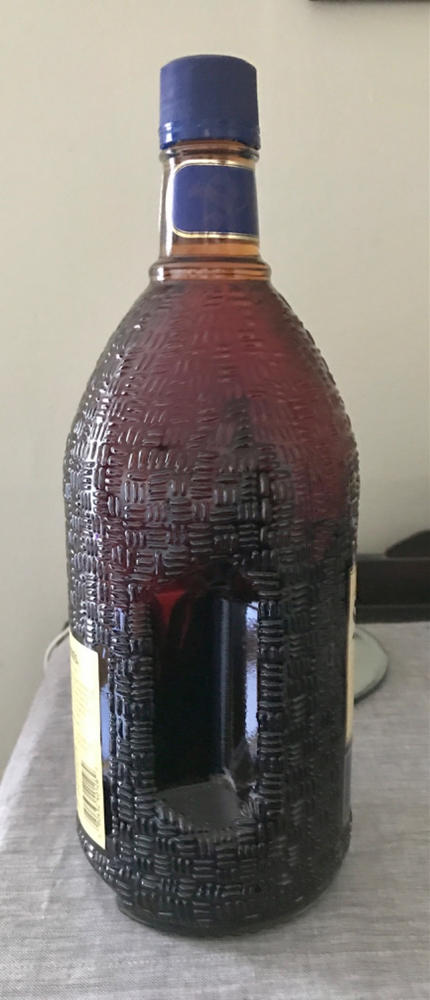
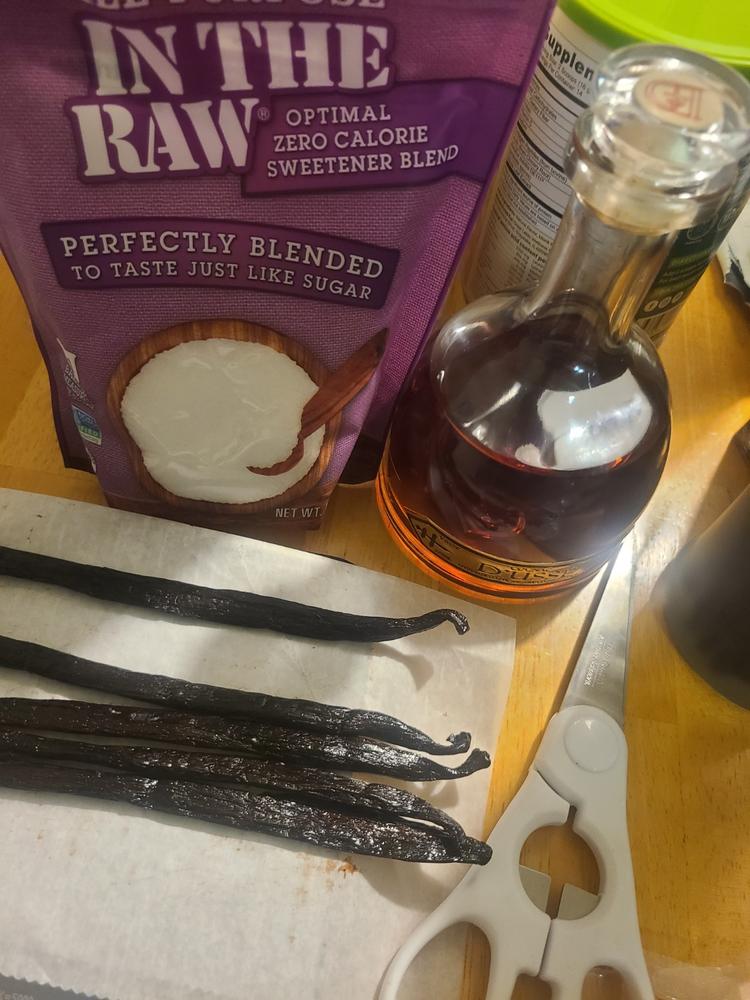
Pompona vanilla's rich, fruity, slightly smoky character makes it an exceptional match for aged extracts and spirits. Infuse a few beans into bourbon, dark rum, brandy, or cognac, and the vanilla's notes of ripe plum, dark chocolate, and banana meld naturally with the oak and caramel already present in the spirit, creating a genuinely more complex infusion than standard vanilla could offer. It's a favorite among craft bartenders and home mixologists alike for exactly this reason, few vanilla varieties pair this naturally with barrel-aged spirits.
You may also like


Frequently Asked Questions
- Vanilla pompona is a distinct, rare species of vanilla orchid, separate from the more common Vanilla planifolia (Bourbon vanilla) used in most Madagascar vanilla. Pompona beans are notably larger, thicker, and oilier than planifolia beans, with a more complex flavor profile that includes notes of ripe plum, dried fruit, cherry, dark chocolate, and even banana, rather than the classic sweet, creamy vanilla flavor most people expect.
- In Madagascar, Vanilla pompona is often locally referred to as "banana vanilla," a nickname earned from its notably large, plump pods compared to standard vanilla beans.
- Vanilla pompona represents less than 1% of global vanilla production. It yields far less per plant than Vanilla planifolia, making it commercially undesirable for large-scale farming despite its rich flavor and history. This scarcity is what makes it a sought-after specialty ingredient among vanilla purists and adventurous chefs.
- Madagascar Pompona vanilla has a rich, sweet, oily character with notes of ripe plum, dried fruit, cherry, and dark chocolate, along with a distinctive banana undertone specific to beans grown in Madagascar's volcanic soil. A subtle smokiness rounds out the flavor, giving it far more complexity than traditional planifolia vanilla.
- Pompona pods naturally carry higher water content than standard vanilla, so sun-curing is more effective than water-blanching for reducing moisture, intensifying aroma, and stabilizing the bean. This slower process, closer to traditional Mexican curing methods, contributes to Pompona's deeper, more complex flavor.
- Pompona vanilla is excellent in vanilla extract, especially when infused into bourbon, dark rum, brandy, or cognac, where its fruity complexity pairs beautifully with the spirit. It also shines in gourmet baking, custards, and savory reductions where a bolder, more complex vanilla flavor is desired.
- Yes. In addition to our Madagascar Pompona, we carry Costa Rican Pompona, a hybrid of Pompona and Planifolia orchids, and Peruvian Pompona, wild-harvested from the Amazon region. Each origin offers a slightly different expression of this rare species, so it's worth comparing if you're exploring Pompona vanilla.
- Store Pompona beans in an airtight container in a cool, dark place, away from direct light and heat. Properly stored, they retain their aroma and quality for approximately 12-18 months.