


Pimienta Blanca Entera
Current price: $ 164.00

Vanilla Beans
Excellent Product! Excellent Service!

I'm a convert
I've been making my own vanilla extract for over a decade and used to buy my beans based on reviews at a Infamous Global seller. Was never sure what I would get. Then I found this company! The beans were beautiful! Fragrant, moist but not too moist, easy to cut open to expose the seeds and each Bean was six to seven inches long. I'm a happy extract maker! 💝💃🥳
High Quality Vanilla - excellent customer service.
Slo Food group team takes great care of their customers. Received a broken bottle of Vanilla and it was immediately handled. Received my replacement bottle within 3 days.
This extract is used to make our Tahitian Vanilla Cakes!

Great place to get your spices
SLO Food group is the best place I have found to buy my vanilla beans, great customer service, fast shipping and very competitive prices. Thank you for helping me with my project, Vanilla extract. Thank you don young




This is a carousel with one large image and a track of thumbnails below. Select any of the image buttons to change the main image above.
Vanilla Beans
Excellent Product! Excellent Service!
I'm a convert
I've been making my own vanilla extract for over a decade and used to buy my beans based on reviews at a Infamous Global seller. Was never sure what I would get. Then I found this company! The beans were beautiful! Fragrant, moist but not too moist, easy to cut open to expose the seeds and each Bean was six to seven inches long. I'm a happy extract maker! 💝💃🥳
High Quality Vanilla - excellent customer service.
Slo Food group team takes great care of their customers. Received a broken bottle of Vanilla and it was immediately handled. Received my replacement bottle within 3 days.
This extract is used to make our Tahitian Vanilla Cakes!
Great place to get your spices
SLO Food group is the best place I have found to buy my vanilla beans, great customer service, fast shipping and very competitive prices. Thank you for helping me with my project, Vanilla extract. Thank you don young
A Peppercorn With Real Depth

Real Fermentation, Real Flavor
Soaked for approximately 10 days, long enough for true fermentation, our white peppercorns develop a deeper, funkier complexity that a quick-soaked imitation can't match.

Sharper, Cleaner Heat
A less harsh bite than black pepper, with earthy, grassy, and floral notes ideal for dishes where you want peppery flavor without the bite.

No Black Flecks, Full Flavor
The perfect stand-in for black pepper in light-colored sauces, chowders, and mashed potatoes, where visible specks aren't wanted.

Best Added Late
Unlike many spices, white pepper is best added toward the end of cooking to preserve its delicate, fermented complexity.
Technical Specifications
| Origin | Sri Lanka |
|---|---|
| Botanical Name | Piper nigrum |
| Common Names | White Pepper, White Peppercorns |
| Grade | Whole, Gourmet |
| Processing Method | Fermented (Approx. 10-Day Soak) Before Skin Removal and Drying |
| Color/Appearance | Light Tan, Round, Smooth Exterior |
| Flavor Profile | Sharper Than Black Pepper, Less Harsh, Fermented Complexity |
| Tasting Notes | Earthy, Grassy, Floral, Subtle Funk |
| Certifications | Kosher (EarthKosher), GMP |
| Uses | White Sauces, Chowders, Mashed Potatoes, Fish, Vegetables, Light-Colored Dishes |
| Pairing | Cream Sauces, Seafood, Sea Salt |
| Usage Note | Add Toward the End of Cooking; Extended Heat Can Introduce Bitterness |
| Storage | Airtight Container, Cool, Dry Place |
| Shelf Life | 24-36 Months Properly Stored |
| Packaging | Barrier Film Pouches and Bags, Food-Grade |
White Peppercorns, Natural Fermentation and Subtle Heat
White pepper hails from Piper nigrum, the same plant that black pepper comes from. While white peppercorns are lesser-known than the king of spices, black pepper, they shouldn't be forgotten, as they present an entirely different flavor profile that's perfect for adding a layer of complexity to soups, stews, sauces, curries, and more. They're also a wonderful stand-in for black pepper when you don't want black pepper flecks to appear in your dish.
How Are White Peppercorns Different from Black Peppercorns?
Buy Whole White Peppercorns for Soups, Stews, Sauces, and More
Fermented for a Bolder, Funkier Flavor
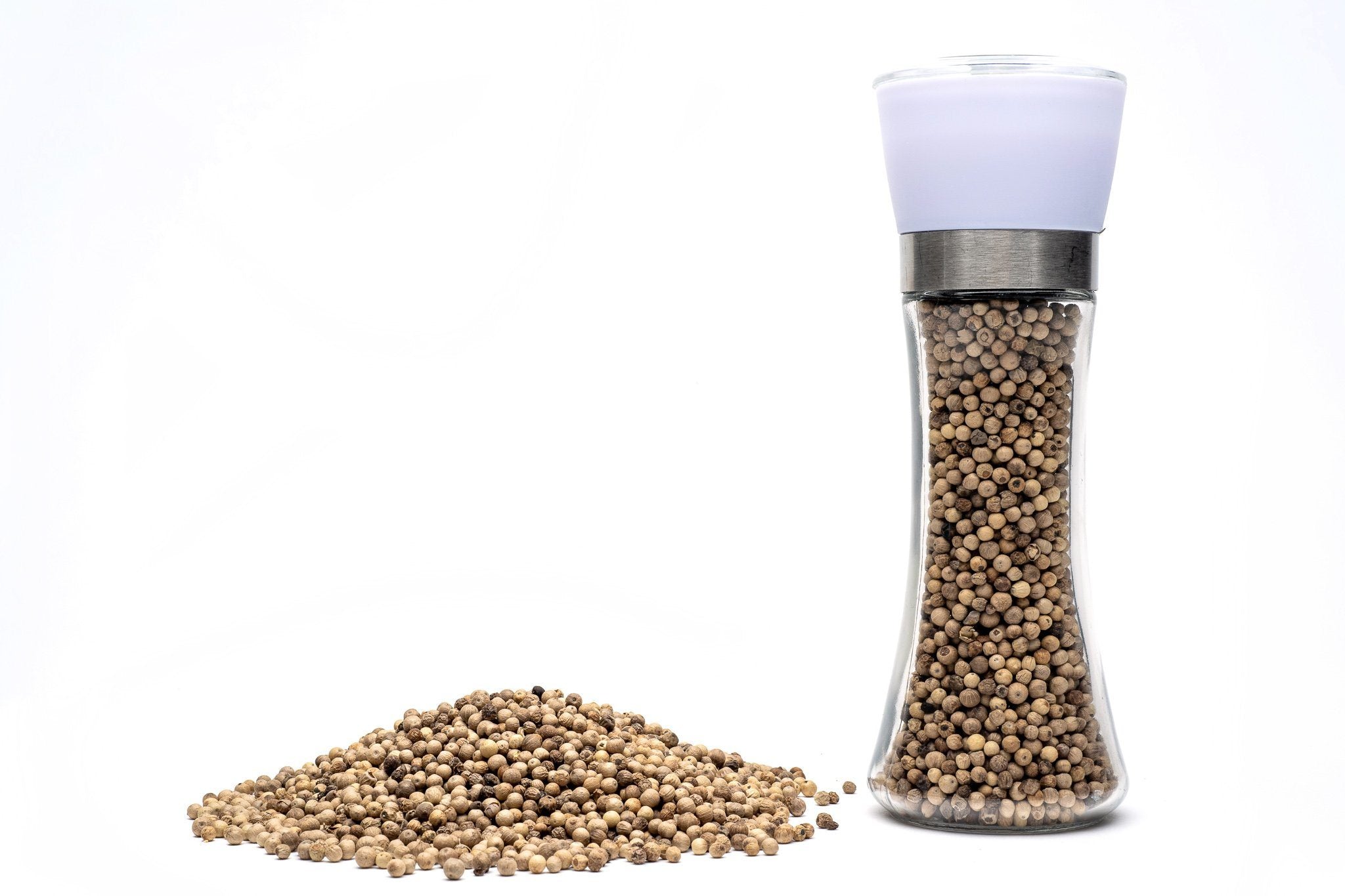
Though white and black peppercorns both come from the same seed of the same plant, they look, taste, and smell different. These differences are present due to the process in which the seeds are harvested and processed. White peppercorns must be picked at the right stage of ripeness. The pepper berries are then soaked in water for approximately 10 days, long enough for genuine fermentation to occur, before the outer skin is removed. Finally, they are dried. The result is a peppercorn with a less harsh flavor than its black counterpart, with what many might describe as earthy, grassy, or floral notes, alongside a subtle fermented depth. Black pepper, on the other hand, is derived from unripened berries of the Piper nigrum plant, dried with the skin left intact, which leads to the more recognizable spicy flavor and aroma.
White pepper is often used in lightly colored sauces when cooks want to avoid black pepper specks while still getting a peppery kick. In classic cooking, white peppercorns are most common in white mother sauces, chowders, mashed potatoes, fish, and even vegetables. It's not just for aesthetics, though: white peppercorns add a subtle layer of peppery flavor and a unique, fermented complexity to a dish.
Though white and black peppercorns both come from the same seed of the same plant, they look, taste, and smell different, and the difference comes down entirely to how they're processed, the same is true of green peppercorns, harvested and preserved at yet another stage. White peppercorns must be picked at the right stage of ripeness, then soaked in water for approximately 10 days, long enough for genuine fermentation to occur, before the outer skin is removed and the beans are dried. That fermentation period is what sets true white pepper apart from a quick-soaked imitation: it develops a deeper, funkier, more complex flavor that a short rinse simply can't replicate. The result is a peppercorn with a less harsh bite than its black counterpart, carrying earthy, grassy, and floral notes alongside a subtle fermented depth. Black pepper, by contrast, comes from unripened berries that are dried with the skin left intact, producing the sharper, more familiar spicy flavor and aroma most people know.
How to Use White Pepper
White pepper is often used in lightly colored sauces when cooks want to avoid black pepper specks while still getting a peppery kick. In classic cooking, white peppercorns are most common in white mother sauces, chowders, mashed potatoes, fish, and even vegetables. It's not just for aesthetics, though: white peppercorns add a subtle layer of peppery flavor and a unique, fermented complexity to a dish.
Unlike many other spices, white pepper is best used toward the end of the cooking process to finish a dish, since lengthy cooking times can alter its flavor compounds and produce a somewhat bitter taste. Looking for a great finishing salt to pair with your peppercorns? Head over to our flake sea salt for the best finishing salt money can buy.
*Our white peppercorns are certified kosher by EarthKosher.


Frequently Asked Questions
- Yes. Our white peppercorns are soaked in water for approximately 10 days before the outer skin is removed, long enough for genuine fermentation to occur. This is different from quick-soaked white pepper, which is only soaked a few days and doesn't develop the same deep, funky complexity.
- Both come from the same plant, Piper nigrum, but they're processed differently. White pepper is picked ripe, fermented in water for about 10 days, then has its skin removed before drying, resulting in a milder, earthier, more complex flavor. Black pepper is picked unripe and dried with the skin intact, producing a sharper, more familiar spicy flavor.
- White pepper is best added toward the end of cooking. Extended heat can alter its flavor compounds and introduce a bitter taste, so it's best used as a finishing touch rather than added early in the cooking process.
- White pepper is ideal for light-colored sauces, chowders, mashed potatoes, fish, and vegetables, anywhere you want peppery flavor without visible black flecks. It's a classic component of white mother sauces in French cooking.
- Store in an airtight container in a cool, dry place. Properly stored, white peppercorns have a shelf life of 24-36 months.