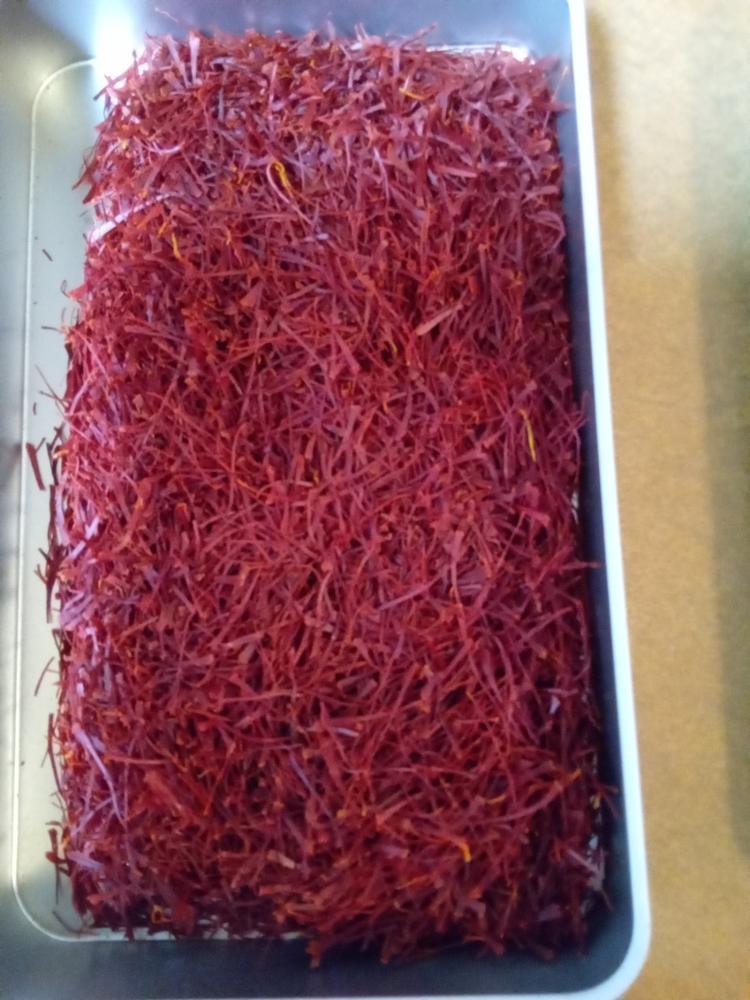
Azafrán Super Negin Cut Afganistán
Current price: Dhs. 41.00

Vanilla Beans
Excellent Product! Excellent Service!

I'm a convert
I've been making my own vanilla extract for over a decade and used to buy my beans based on reviews at a Infamous Global seller. Was never sure what I would get. Then I found this company! The beans were beautiful! Fragrant, moist but not too moist, easy to cut open to expose the seeds and each Bean was six to seven inches long. I'm a happy extract maker! 💝💃🥳
High Quality Vanilla - excellent customer service.
Slo Food group team takes great care of their customers. Received a broken bottle of Vanilla and it was immediately handled. Received my replacement bottle within 3 days.
This extract is used to make our Tahitian Vanilla Cakes!

Great place to get your spices
SLO Food group is the best place I have found to buy my vanilla beans, great customer service, fast shipping and very competitive prices. Thank you for helping me with my project, Vanilla extract. Thank you don young



This is a carousel with one large image and a track of thumbnails below. Select any of the image buttons to change the main image above.
Vanilla Beans
Excellent Product! Excellent Service!
I'm a convert
I've been making my own vanilla extract for over a decade and used to buy my beans based on reviews at a Infamous Global seller. Was never sure what I would get. Then I found this company! The beans were beautiful! Fragrant, moist but not too moist, easy to cut open to expose the seeds and each Bean was six to seven inches long. I'm a happy extract maker! 💝💃🥳
High Quality Vanilla - excellent customer service.
Slo Food group team takes great care of their customers. Received a broken bottle of Vanilla and it was immediately handled. Received my replacement bottle within 3 days.
This extract is used to make our Tahitian Vanilla Cakes!
Great place to get your spices
SLO Food group is the best place I have found to buy my vanilla beans, great customer service, fast shipping and very competitive prices. Thank you for helping me with my project, Vanilla extract. Thank you don young
Saffron: The World's Most Expensive Spice

150,000 Flowers, 1 Kilogram
It takes more than 150,000 crocus flowers to produce just one kilogram of dried saffron, each flower yields only three delicate red stigmas.

Entirely Hand-Harvested
No machine has ever successfully replaced human hands in saffron production, every flower is picked and every stigma separated by hand.

A Short Harvest Window
Crocus sativus blooms for only a few weeks each year, and each flower must be picked within hours the morning it opens, there's no room for delay.

Verified, Not Just Claim
This saffron's crocin of 293.3, independently tested against ISO 3632 Category I specifications by Afghanistan's government lab
Technical Specifications
| Origin | Herat Province, Afghanistan |
|---|---|
| Botanical Name | Crocus sativus |
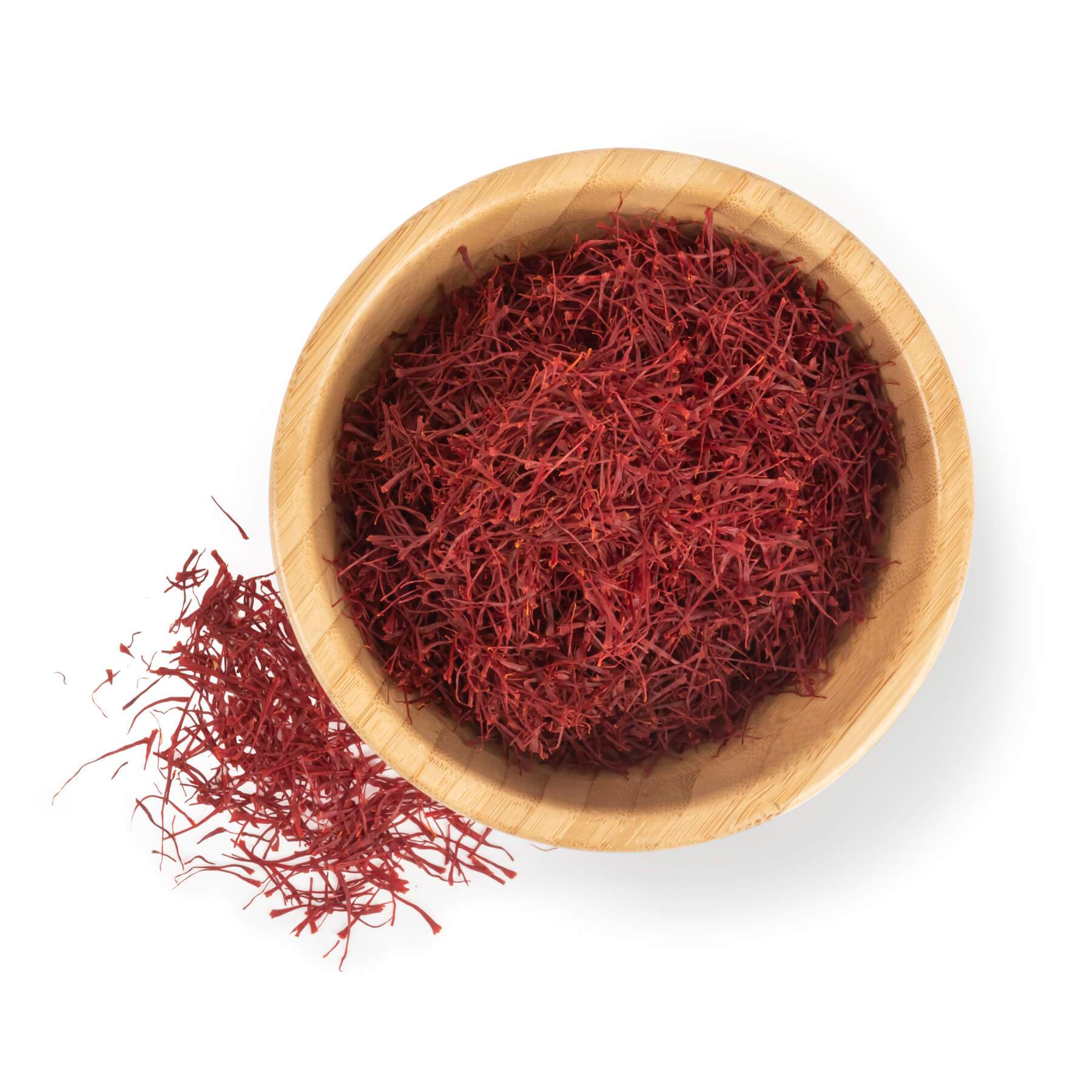
| Grade | Super Negin (Longest, All-Red Threads; Less than 1% Yellow Style) by Weight |
| Aroma | Warm, Sweet, Honey-Like, with Floral, Hay-Like, and Grassy Undertones |
| Lab Testing | Independently Tested by Afghanistan's Government Saffron Quality Control Lab; Meets ISO 3632 Category I Specifications |
| Crocin (Coloring Strength) | 293.3 (Category I Minimum: 200) |
| Picrocrocin (Flavor Strength) | 101.9 (Category I Minimum: 70) |
| Safranal (Aroma Strength) | 31.2 (Category I Range: 20-50) |
| Moisture & Volatile Matter | 7.5% (Category I Maximum: 10%) |
| Extraneous Matter | 0.14% (Category I Maximum: 0.5%) |
| Artificial Colorants | Absent |
| Certifications | Kosher (EarthKosher), GMP |
| Additional Attributes | Non-GMO, Gluten Free, All-Natural |
| Harvest Method | Hand-Harvested at Dawn; Only Top 10% of Threads Selected as Super Negin |
| Processing | Naturally Air-Dried Under Controlled Exposure |
| Uses | Tea, Rice, Paella, Risotto, Baking, Desserts, Broths, Kulfi, Natural Coloring Agent for Textiles |
| Preparation | Crush Gently and Bloom in Warm Water or Milk for at Least 10 Minutes |
| Usage Guide | 3-4 Threads per Cup (8 oz) of Tea; 10-15 Threads per Cup of Dry Rice; 20-30 Threads (About a Pinch) per 4 Servings of Paella or Risotto; Bloom in 2 Tablespoons of Warm Water, Milk, or Broth for 10-15 Minutes Before Adding |
| Usage Tip | More Is Not Better; Excessive Use Can Turn Bitter, Medicinal-Tasting, and Overpowering Rather Than More Flavorful |
| Storage | Airtight, Cool, Dark Place, Away From Direct Sunlight |
| Shelf Life | 24-36 Months |
| Packaging | Food-Grade Acrylic Containers (to Avoid Breakage), Tins, and Film Pouches; Boxed for Bulk Sizes |
Grown in Afghanistan's Saffron Heartland
Grown, harvested, and dried in the Herat province of Afghanistan, these saffron filaments are of exceptional quality, luxurious, all-red threads perfect for cooking, teas, and more. Not only are we pleased to provide Afghan saffron because of its superior quality, but because of the support we're able to provide to the farmers. Saffron is a relatively new market for Afghan farmers, bringing much-needed income to communities and families.
Saffron, while known the world over for being the most expensive and sought-after spice, has not always been an exportable commodity in this region of the world. Since 2001, Afghanistan has rapidly ascended in the world of saffron and spices to become one of the world's premier producers of quality saffron, with Herat emerging as the country's saffron heartland.
Why Choose Saffron from Afghanistan
How to Use Saffron for Maximum Flavor
Facts About Our Super Negin Saffron
You'll fall in love with Afghan saffron because it offers a high level of quality at a great price. The filaments contain deep, bold, all-red coloring, "Super Negin" refers to the longest, most visually pure grade of saffron thread, entirely red with no yellow style attached. The aroma is warm and sweet, and the flavor tantalizes the tongue and tickles the senses.
That color, aroma, and flavor come from three naturally occurring compounds: crocin (responsible for saffron's rich color), safranal (its distinctive aroma), and picrocrocin (its characteristic taste), the same three compounds measured under the ISO 3632 international grading standard used across the saffron trade. This saffron is independently tested by Afghanistan's official government Saffron Quality Control Laboratory using ISO 3632-2:2010 methods, with a crocin reading of 293.3, well above the 200 minimum required to meet the top ISO 3632 Category I specification, placing it firmly in premium territory even among the world's best saffron.
To get the most out of your saffron, gently crush the threads with a mortar and pestle and bloom them in warm water or milk for at least 10 minutes, though steeping overnight draws out even more color and flavor. Curious whether this soaking step is really necessary? We break down exactly why soaking saffron matters on our blog. As a general guide, use 3-4 threads per cup of tea, 10-15 threads per cup of dry rice, or about 20-30 threads, roughly a pinch, for a paella or risotto serving four.
A word of caution: more isn't better with saffron. Adding too much can quickly tip a dish from warm and aromatic into bitter and medicinal-tasting, saffron's flavor compounds are potent enough that overdoing it actually works against you rather than intensifying the result. Start with the lower end of any measurement range, taste as you go, and remember that saffron's aroma should complement a dish, not dominate it.
Buy saffron from Afghanistan for a wonderful addition to your favorite recipes, or as a gift for a friend or family member. We suggest trying some saffron in a chilled tea for an easy starter recipe, our cardamom and saffron kulfi for a rich, chilled dessert, or, if you're a little more advanced and have the time, a warm paella will provide a comforting and hearty meal for a crowd.
*This saffron from Afghanistan is gluten free, non-GMO, all-natural, and certified kosher by EarthKosher.
Our saffron is grown and harvested in the Herat province of Afghanistan, a region whose soil and climate are well-suited to the saffron crocus flower. It's sourced from farms that use natural, sustainable farming techniques, and since saffron is naturally gluten-free and has never historically been a GMO product, its cultivation dates back roughly 3,500 years, long before genetic modification existed.
Every batch is naturally air-dried, using ample controlled air exposure to slowly dry the saffron filaments for consistent quality. Harvesting is done entirely by hand, in the early morning when the saffron crocus flower first opens. The whole flower is removed, and the inner filaments are sorted by size and grade, only the top ten percent of threads make the cut as Super Negin saffron. And like many of our other herbs and spices, our saffron is certified kosher by EarthKosher, you can view all our kosher ingredients here.
Why Saffron Costs What It Costs
Saffron's price isn't marketing, it's math. It takes more than 150,000 crocus flowers to produce just one kilogram of dried saffron, and each flower yields only three delicate red stigmas, the actual saffron threads you see in the jar. Crocus sativus blooms for just a few weeks each year, and every flower has to be picked by hand the moment it opens, there's no mechanized alternative that's ever successfully replaced human hands in this process. That's before the stigmas are even separated and dried. When you understand the sheer scale of labor behind even a single gram, it becomes clear why saffron has earned its reputation as the world's most expensive spice.